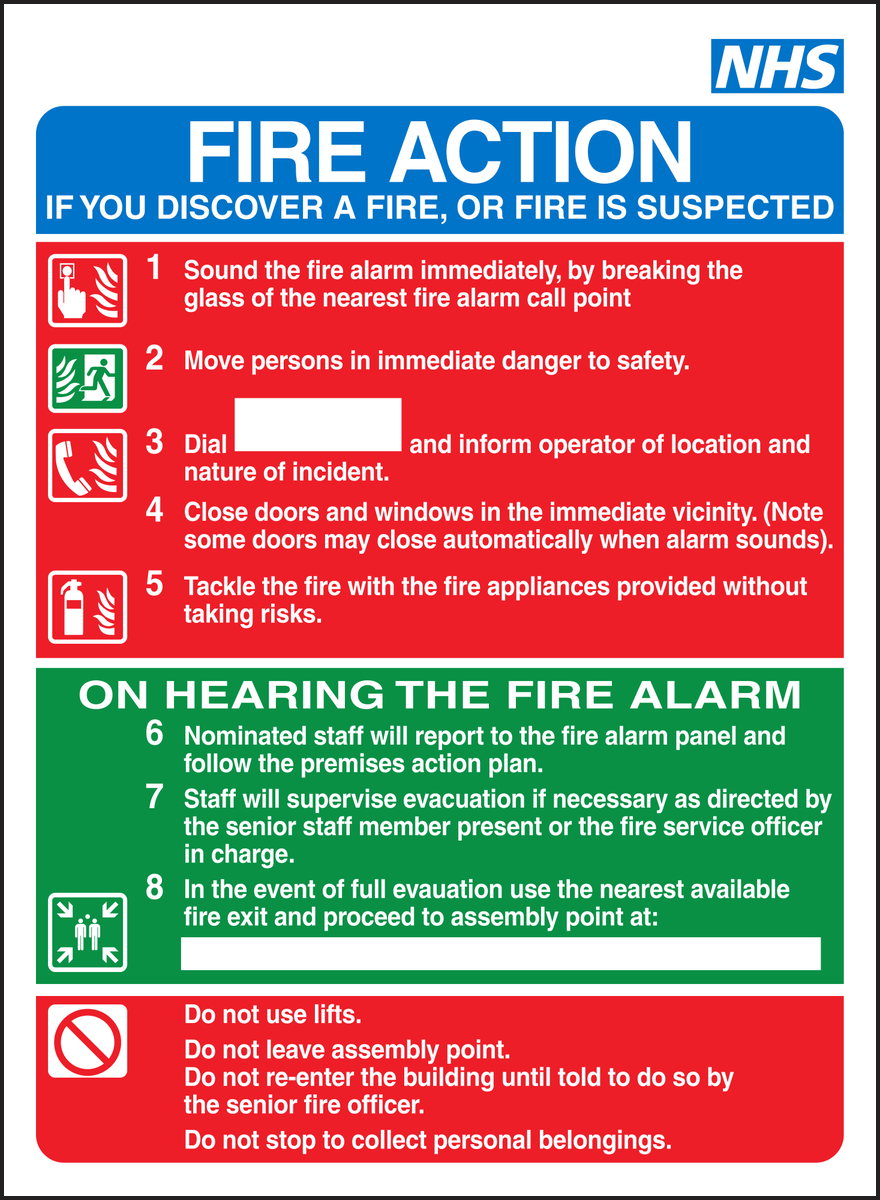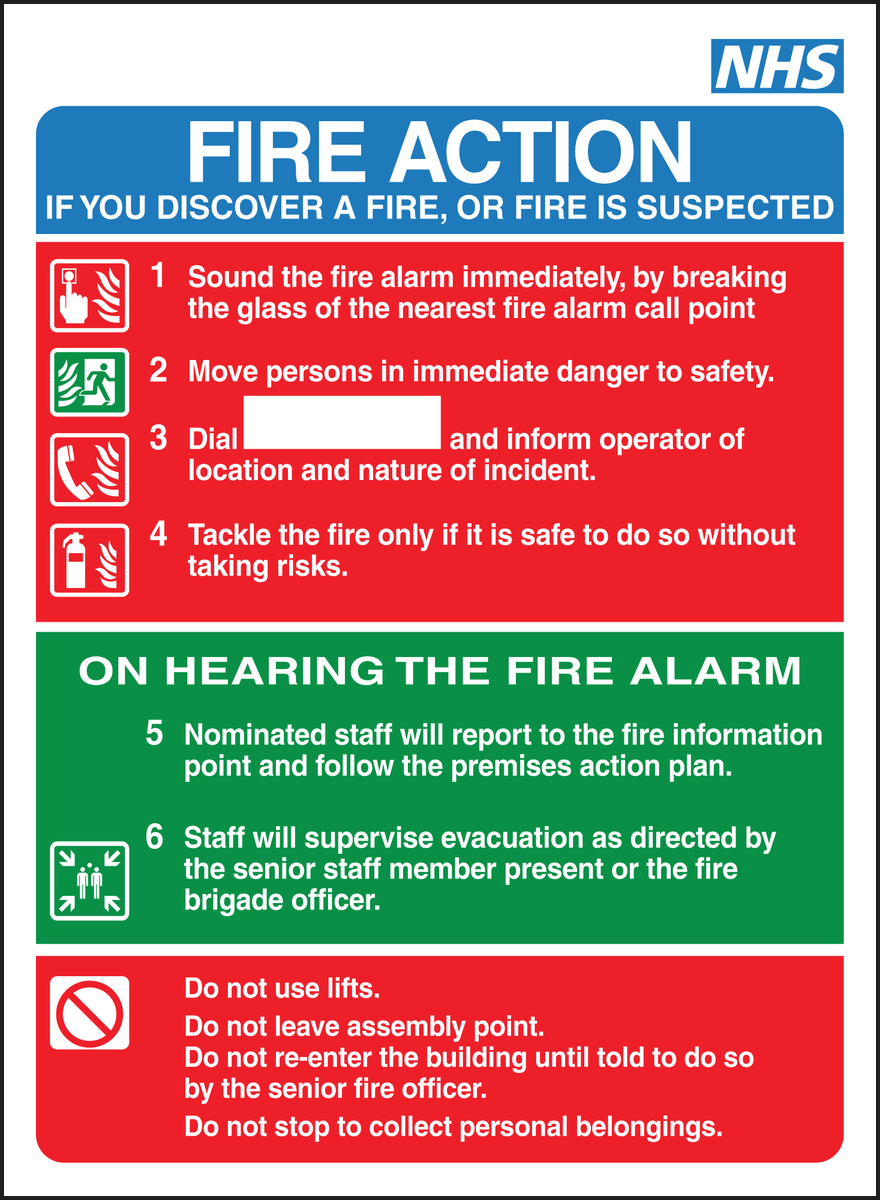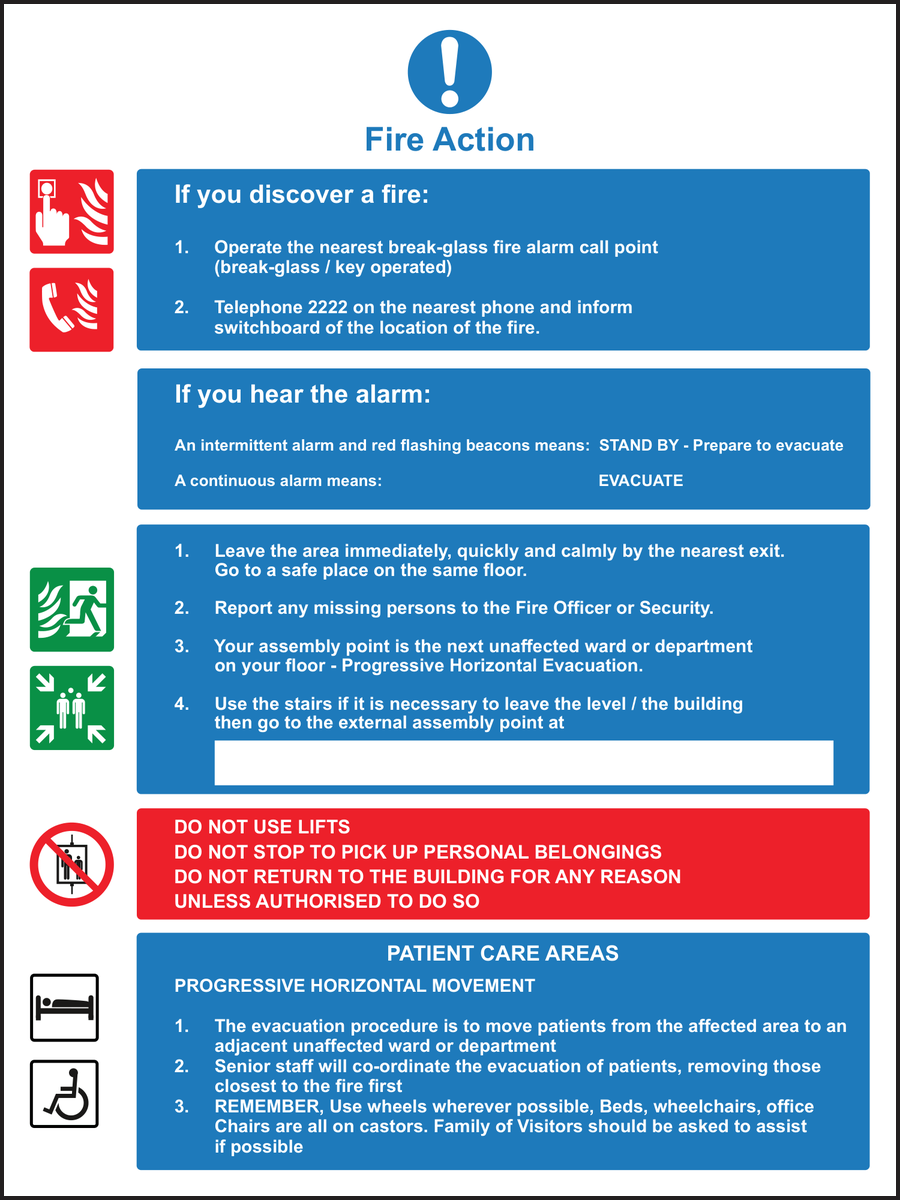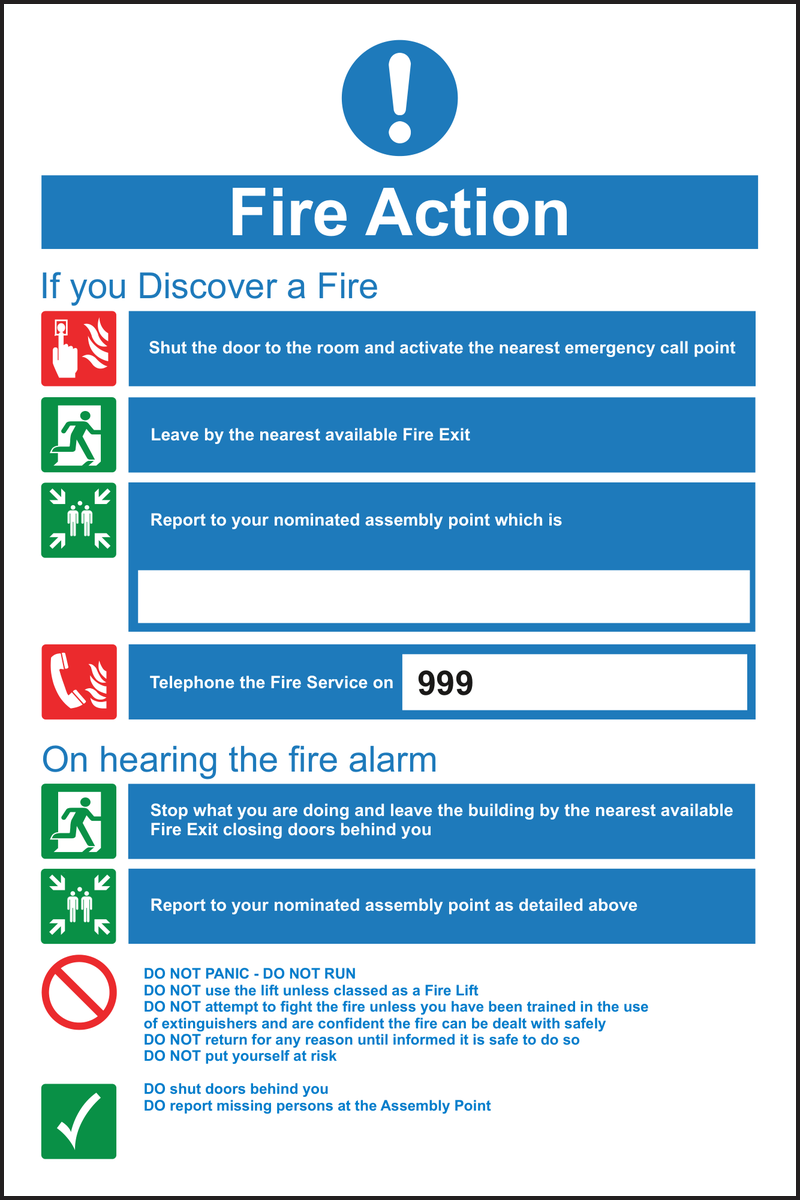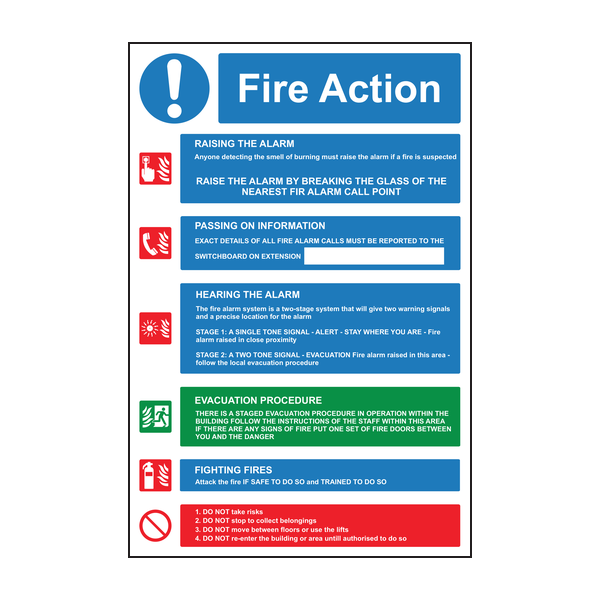
Fire Action Two Stage Alarm And Staged Evacuation Sign
Standards: E002 (ISO) F001 (ISO) F005 (ISO) F006 (ISO) M001 (ISO) P001 (ISO)
Variant:
Size:
Material:
£ Inc. VAT

| 1 | 2+ | 5+ | 10+ | 20+ |
|---|---|---|---|---|
| 0.00 | 0.00 | 0.00 | 0.00 | 0.00 |
| FAHOCOR-2-SAV | 200mm x 300mm | Self Adhesive Vinyl Sticker |
3.94 (inc VAT 4.73) |
3.74 (inc VAT 4.49) |
3.55 (inc VAT 4.26) |
3.35 (inc VAT 4.02) |
3.23 (inc VAT 3.88) |
| FAHOCOR-2-RP | 200mm x 300mm | 1mm Rigid |
6.31 (inc VAT 7.57) |
5.99 (inc VAT 7.19) |
5.68 (inc VAT 6.82) |
5.36 (inc VAT 6.43) |
5.17 (inc VAT 6.20) |
| FAHOCOR-2-PL | 200mm x 300mm | Rigid Photoluminescent |
6.53 (inc VAT 7.84) |
6.20 (inc VAT 7.44) |
5.88 (inc VAT 7.06) |
5.55 (inc VAT 6.66) |
5.35 (inc VAT 6.42) |
| Code | Size | Material | 1 | 2 - 4 | 5 - 9 | 10 - 19 | 20+ |
|---|
|
200mm x 300mm Self Adhesive Vinyl Sticker |
3.94 (inc VAT 4.73) |
3.74 (inc VAT 4.49) |
3.55 (inc VAT 4.26) |
3.35 (inc VAT 4.02) |
3.23 (inc VAT 3.88) |
|
200mm x 300mm 1mm Rigid |
6.31 (inc VAT 7.57) |
5.99 (inc VAT 7.19) |
5.68 (inc VAT 6.82) |
5.36 (inc VAT 6.43) |
5.17 (inc VAT 6.20) |
|
200mm x 300mm Rigid Photoluminescent |
6.53 (inc VAT 7.84) |
6.20 (inc VAT 7.44) |
5.88 (inc VAT 7.06) |
5.55 (inc VAT 6.66) |
5.35 (inc VAT 6.42) |
| Size / Material | 1 | 2+ | 5+ | 10+ | 20+ |
|---|
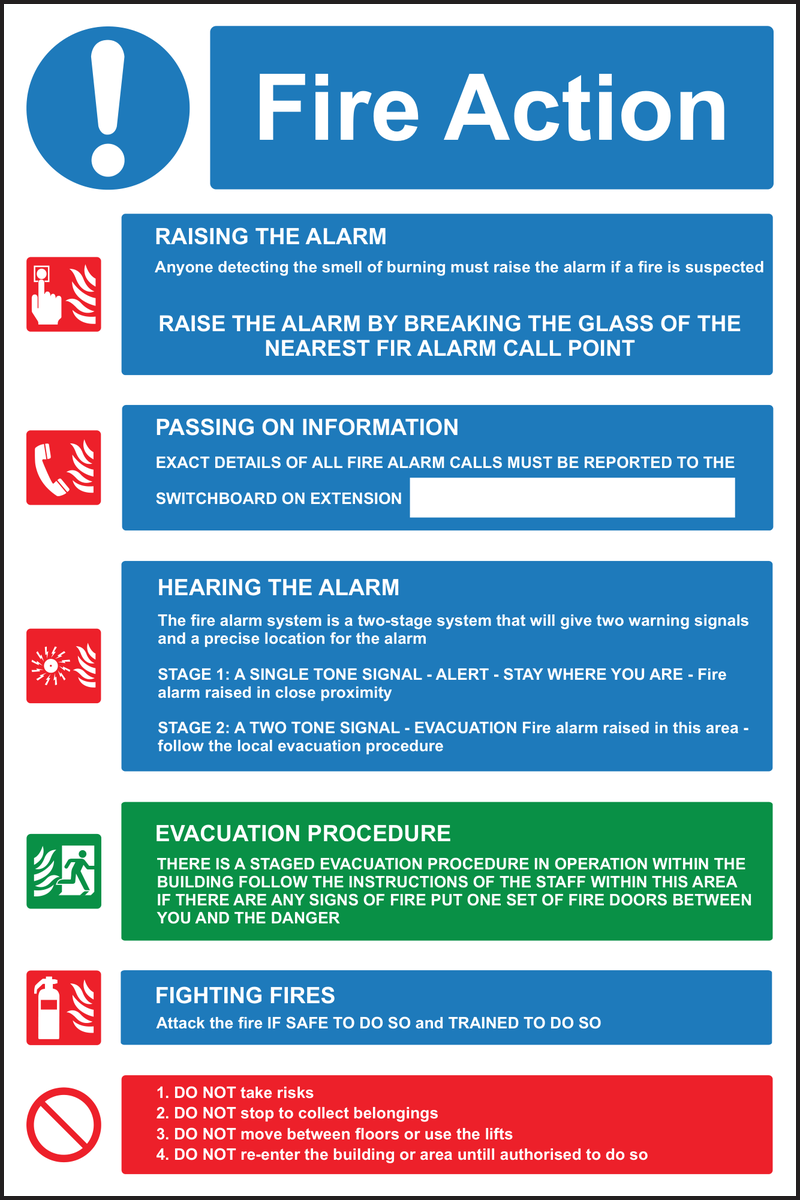
This Fire Action Two Stage Alarm And Staged Evacuation Sign provides detailed emergency instructions for premises operating a two stage fire alarm system and staged evacuation procedure. The sign explains how to raise the alarm, report accurate information to the switchboard, recognise the different alarm signals, follow the appropriate evacuation procedure and respond safely if a fire is discovered.
The Raising The Alarm section instructs anyone detecting the smell of burning to raise the alarm if a fire is suspected. This reinforces the importance of acting promptly when there are reasonable indications that a fire may have started rather than waiting until visible flames are present.
Occupants are instructed to raise the alarm by breaking the glass of the nearest fire alarm call point. Prompt activation of the alarm helps alert relevant areas of the building and allows the established fire emergency procedures to begin as quickly as possible.
Fire alarm call points should remain clearly visible, readily accessible and free from obstruction. Where resettable call points are installed instead of traditional break glass units, the wording displayed should correspond with the actual equipment provided within the premises.
The Passing On Information section requires exact details of all fire alarm calls to be reported to the switchboard using the designated extension number. Space should be completed with the correct internal extension or contact details according to the premises emergency arrangements.
Accurate information can be particularly important in larger or more complex buildings. Details concerning the location, nature of the incident and any known hazards can assist switchboard personnel and those coordinating the emergency response.
The Hearing The Alarm section explains that the premises operates a two stage fire alarm system using two different warning signals. Understanding the difference between these signals is essential because each alarm stage requires a different response from occupants and staff.
Stage 1 uses a single tone signal as an Alert condition. The sign instructs occupants to stay where they are because a fire alarm has been raised in close proximity. Staff and occupants should remain alert and be prepared to follow further instructions according to the premises fire action plan.
Stage 2 uses a two tone signal to indicate Evacuation. This means a fire alarm has been raised in the relevant area and occupants should follow the local evacuation procedure without unnecessary delay.
The exact sound, sequence and meaning of alarm signals can vary between buildings. The single tone Alert and two tone Evacuation instructions on this sign should therefore only be used where they accurately correspond with the installed fire alarm system and approved emergency procedures.
The Evacuation Procedure section explains that a staged evacuation procedure operates within the building. Staged evacuation can be used in larger or more complex premises where different areas or zones are evacuated according to the location and development of an incident rather than requiring every occupant to leave simultaneously.
Occupants are instructed to follow the directions of staff within their area. Clearly defined staff responsibilities and suitable fire safety training are particularly important in buildings using staged evacuation because occupants may receive different instructions depending on their location and the alarm condition.
The sign advises that if there are signs of fire, occupants should put one set of fire doors between themselves and the danger. Correctly maintained fire doors can help restrict the spread of fire and smoke and support the compartmentation strategy within the building.
Occupants should not move towards fire or smoke simply to comply with an instruction. Where an intended route or adjoining area is affected by fire, smoke or another immediate hazard, people should move away from the danger and follow the buildings approved alternative evacuation arrangements.
The Fighting Fires section states that a fire should only be attacked if it is safe to do so and the person has been trained to do so. This helps reinforce that portable firefighting equipment should not be used by people who are unfamiliar with its operation or where conditions make firefighting unsafe.
Anyone attempting to use firefighting equipment should have the correct equipment for the fire, maintain a clear means of escape and withdraw immediately if conditions deteriorate. Raising the alarm and following the established evacuation procedure should take priority over attempting to fight a developing fire.
The instruction Do Not Take Risks reinforces that personal safety remains the priority. Staff and occupants should not enter smoke affected areas or undertake actions that could unnecessarily place themselves or other people in danger.
The instruction Do Not Stop To Collect Belongings helps prevent unnecessary delays during evacuation. Occupants should not return to offices, lockers, changing rooms or other areas simply to retrieve coats, bags, phones or other possessions.
The instruction Do Not Move Between Floors Or Use The Lifts is particularly relevant to the staged evacuation strategy described on the sign. Occupants should remain within or move according to the designated procedure for their area rather than independently moving between floors.
Ordinary passenger lifts should not normally be used during a fire emergency. Any arrangements involving specifically designed evacuation lifts or firefighting lifts should be determined by the approved fire strategy and emergency procedures for the particular building.
The final instruction tells occupants not to re-enter the building or affected area until authorised to do so. Even where there are no obvious signs of fire, smoke, heat or other hazards may remain and emergency operations may still be taking place.
This Fire Action Sign may be suitable for hospitals, healthcare premises, large commercial buildings, educational establishments, public buildings and other complex premises where a formally established two stage alarm and staged evacuation procedure is in operation.
The wording on this sign is highly site specific and should not be used as a generic fire action procedure. The switchboard extension, alarm tones, meaning of each alarm stage, staff responsibilities, fire door arrangements and staged evacuation procedure must all accurately correspond with the approved fire strategy for the particular premises.
The sign should be reviewed whenever there are changes to the fire alarm system, alarm signals, building layout, fire compartmentation, evacuation zones, switchboard arrangements, staff responsibilities or emergency procedures.
Fire action signage should complement rather than replace a suitable fire risk assessment, documented emergency plan, staff fire safety training, evacuation drills, maintained fire detection and alarm systems, effective compartmentation, correctly maintained fire doors and appropriate firefighting equipment.
Manufactured from durable, high quality materials with excellent print clarity and visibility, this Fire Action Two Stage Alarm And Staged Evacuation Sign provides a professional and long lasting solution for communicating complex fire alarm and evacuation procedures to staff, visitors and other building occupants.
Materials available for this product

Self Adhesive Vinyl Sticker
- Description:
A self adhesive vinyl plus other stuff in here too
- Thickness:
- 95 micron
- Fixing Options:
- Self Adhesive

1mm Rigid
- Description:
1mm Rigid PVC plastic full descritption
- Thickness:
- 900 micron
- Fixing Options:
- Can be screwed or glued

Rigid Photoluminescent
- Description:
- Rigid Photoluminescent (GITD) Glow in the dark
- Thickness:
- 1mm
- Fixing Options:
*indicates your currently selected material